HMS Tornado, HMS Torrent and HMS Surprise:
Disaster by sea-mine, 23rd December 1917
This blog is occasioned by today being the 108th Anniversary of a now largely-forgotten tragedy in which over 250 Royal Navy personnel died within a few hours.
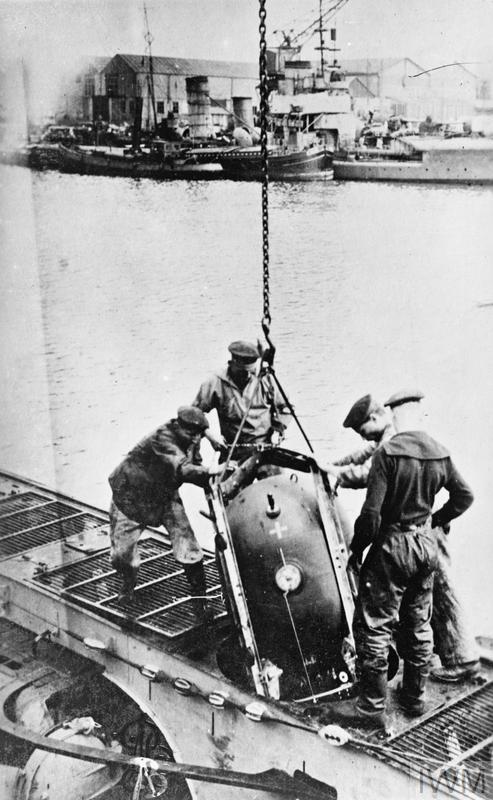
German UC-Class minelaying U-boat
The First World War at sea saw very few large-scale surface actions – most notably Heligoland Bight in 1914, Dogger Bank in 1915 and Jutland in 1916 – and other than these the most common perception is of the steady, relentless massacre of shipping by aggressive U-Boat action. The naval mine, a more passive weapon, was however to wreak a toll as deadly as that inflicted by the torpedo and laying of mines, whether by surface ships, or by submarines (see photograph on right), was actively engaged in by the major combatants. It is estimated that almost a quarter of a million mines were laid during the conflict. Some minefields were laid to protect safe channels for friendly shipping, others to defend strategic locations – a handful of Turkish mines were probably the single most important factor in making the Allies’ Dardanelles campaign a costly disaster – while others were laid stealthily, in approaches to enemy ports to ambush vessels entering or leaving. A very dramatic, indeed terrifying, portrayal of the hazards of laying such minefields, and of the results they could achieve, can be found in the opening sequences of the magnificent Russian movie, “The Admiral”, of 2008. (Available on YouTube with Englsh subtitles).
The Kingdom of the Netherlands remained neutral during the war, though the threat of possible invasion by Germany, with a possible counter-invasion by the Allies, could not be dismissed. The country was however in a position to trade with both sides, either with or without official sanction, and fortunes were made by many in the process. Netherlands agriculture has always been efficient and food was exported to Britain by “beef run” convoys, to the English east coast. Food could also cross the border into Germany, or German-occupied Belgium, by road, rail or inland waterway.
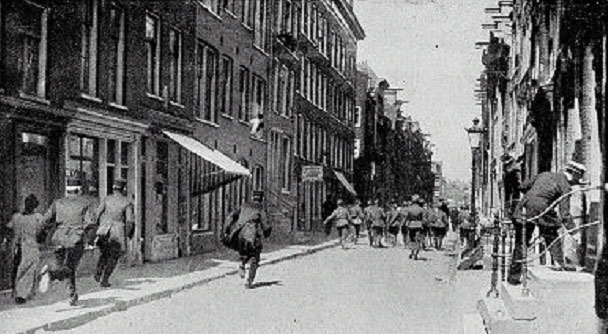
Police chasing rioters in Amsterdam during July 1917 “Potato Riot”
During this time sections of the Dutch population were themselves suffering food shortages – bread rationing had been introduced in January 1917 – and rioting broke out in Amsterdam in July 1917 when mobs, often led by women, broke into warehouses, trains and a ship laden with potatoes which were being withheld from the market. There were clear parallels between these events and those which triggered revolution in Russia in the same year. The riots were put down only when some two thousand troops were sent in to the city, bayonets, sabres and rifles being resisted by hails of paving bricks. Particularly worrying was the fact that some troops who were native to Amsterdam showed unwillingness to confront the rioters. Two live-firing incidents resulted in fatalities – no less than nine dead and one hundred and fourteen wounded.
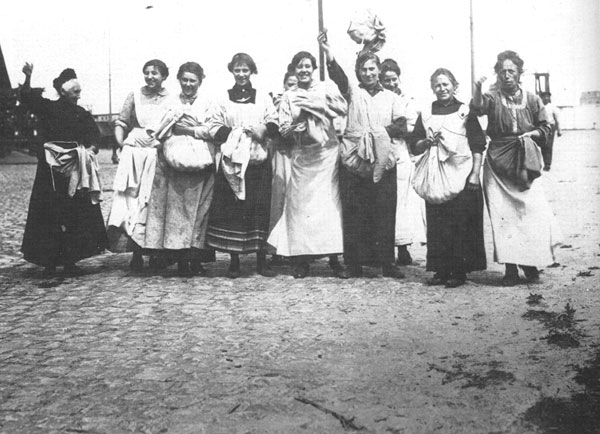
Triumphant female rioters in Amsterdam, July 1917, with potatoes in their aprons
Protection of the “beef run” convoys to and from the Netherlands was entrusted to the Royal Navy’s Harwich Force, the large squadron of light cruisers and destroyers responsible for control of the Southern North Sea. On mid-December 1914 just such a convoy was sent to the great Dutch port of Rotterdam, escorted by no less than six vessels of the 10th Destroyer Flotilla – the V-Class flotilla leader HMS Valkyrie and the new R-Class destroyers Tornado, Torrent, Surprise, Sylph and Radiant. All these ships had entered service during 1917.
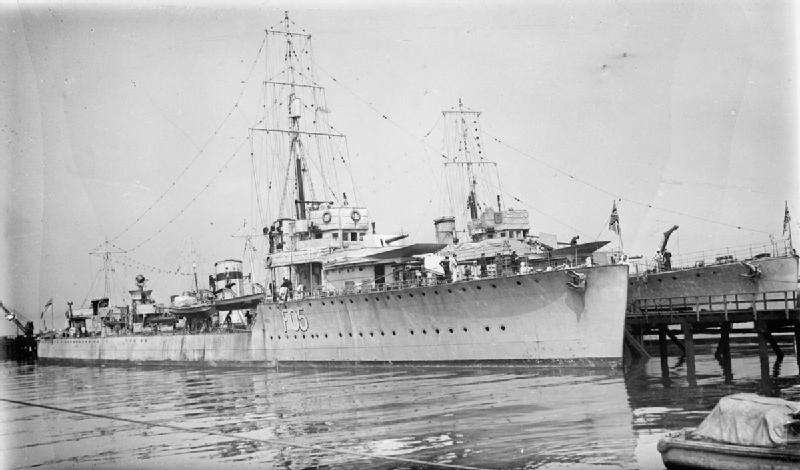
HMS Valkyrie – seen here in 1918
The R-Class destroyers – of which over sixty were built, eight being sunk – represented the contemporary peak of British destroyer design. Of 950-tons and 273-feet long, their 27,000-horsepower gave them a maximum speed of 36 knots. (This should be compared with the 40,000-horsepower of the 29,000-ton Revenge Class battleships then coming into service, with a maximum speed of 21 knots). The crew was 82 strong. Armed with three 4-inch guns, one two-pounder anti-aircraft weapon and four 21-inch torpedo tubes, the R-Class destroyers were formidable vessels.
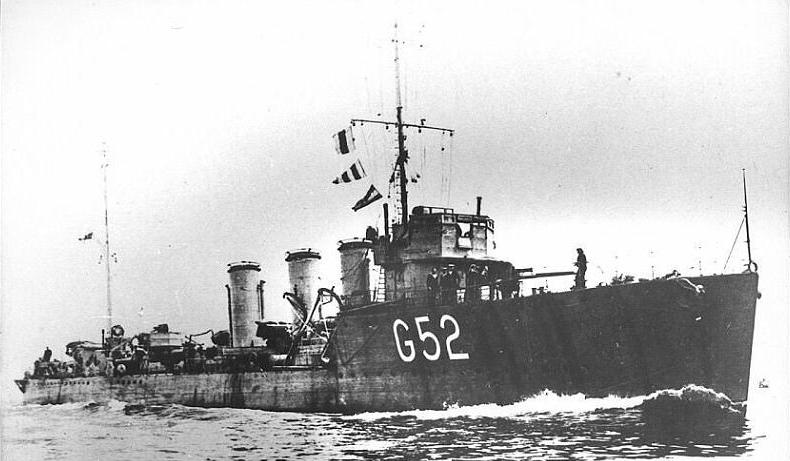
HMS Satyr – R-Class sister of the destroyers involved in the 23 December 1917 incident
While still outside Dutch territorial waters – which the British naval forces were forbidden to enter, though the merchant convoy was permitted to do so, Valkyrie struck a mine. She did not sink, though twelve men were killed and others seriously wounded She was taken in tow by Sylph and brought back to Harwich. The convoy went on, escorted by the four remaining destroyers. On approaching the Dutch coast, these vessels were required to loiter outside territorial waters while the civilian vessels entered the Nieuwe Waterweg – the approach to Rotterdam – at Hoek van Holland.
In the early morning of December 23rd, while waiting near the Maas Light Buoy for the returning convoy, Tornado, Surprise, Torrent and Radiant ran into a previously unexpected German minefield in the darkness. Torrent was the first to hit a mine. Surprise and Tornado then approached the stricken Torrent to rescue her crew while Radiant stood off to guard against any German U-boats that might be in the vicinity. As help approached, Torrent struck a second mine and sank almost immediately. When Tornado turned away she struck two mines – only two of her crew survived – and Surprise ran into another. Both ships sank. The only lucky aspect of the incident was that Radiant remained undamaged. Picking up survivors in the dark, close to, and perhaps in, a minefield of unknown extent, demanded great skill and courage, but it must nevertheless have been a nightmare. The final death toll from all three ships was 252, an irreparable loss for so many families, many of which would have received telegrams confirming the deaths of loved ones before, or on, Christmas Day.
There are striking similarities with a similar tragedy off the Dutch coast in 1914 when three British cruisers, Aboukir, Cressey and Hogue, fell victim to a single U-boat. As the first cruiser was torpedoed and began to sink the others closed in to rescue survivors and they too were torpedoed in turn.
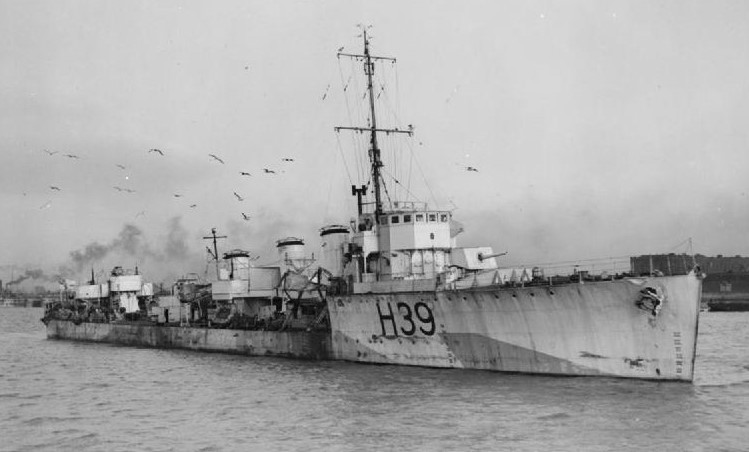
HMS Skate – the only R-Class destroyer to serve in WW2
Expensive vessels, with high manpower demands, the R-Class destroyers were quickly taken out of service when the war ended. They were scrapped in the following years but one was sold to the Royal Thai Navy. Only one, HMS Skate, survived until the Second World War. During it she served as a convoy-escort in the North Atlantic and was present at the Normandy landings in 1944.
Just Published:
Britannia’s Bluff
November 1915 – January 1916
 Britannia’s Bluff, the 13th volume of the Dawlish Chronicles series is now available in hard copy and Kindle. Subscribers tio Kindle Unlimited can read it (like all others volumes in the series) at no extra charge. It can be enjoyed as part of the series or as a standalone story.
It’s November 1915: The Great War rages. Britain has failed to break through the Dardanelles Strait to open a supply route to its Russian allies.
Over 80,000 allied troops are trapped in tiny footholds on the rocky Gallipoli peninsula. Weakened by disease and exposure, they are dominated by Turkish artillery and entrenchments on higher ground. Repeated attempts to advance have resulted in mounting casualties. Now, with winter looming, victory is unachievable. But evacuation from the landing beaches could bring yet worse tragedy . . .
Admiral Sir Nicholas Dawlish, sees one chance – a colossal bluff – to reduce the risks of evacuation. He plans a lightning diversionary campaign at sea, on land and by air.
But will it be in time to help prevent a final bloodbath at Gallipoli?
Purchase Links below.
Australia & New Zealand Click here.
The Dawlish Chronicles – now up to thirteen volumes, and counting …
Click on image below for details