
Guest Blog: Yankee Adventurers in the Pacific
Antoine Vanner is delighted this week to host a guest blog by his fellow Old Salt Press author Joan Druett, who is both a novelist and a historian. Her special sphere of interest whaling and trading in the Pacific in the 19th Century and her blog article below explains the background to her latest book. Full details of Joan and her interests can be found at the end.
YANKEE ADVENTURERS by Joan Druett
The newly fledged United States of America was broke, desperate for trade.
The key was China. Tea and porcelain from Canton could be sold at great profit in Boston and New York – but Chinese merchants were picky about what they would take in exchange. Silver was the preference – but the new nation had little of that.
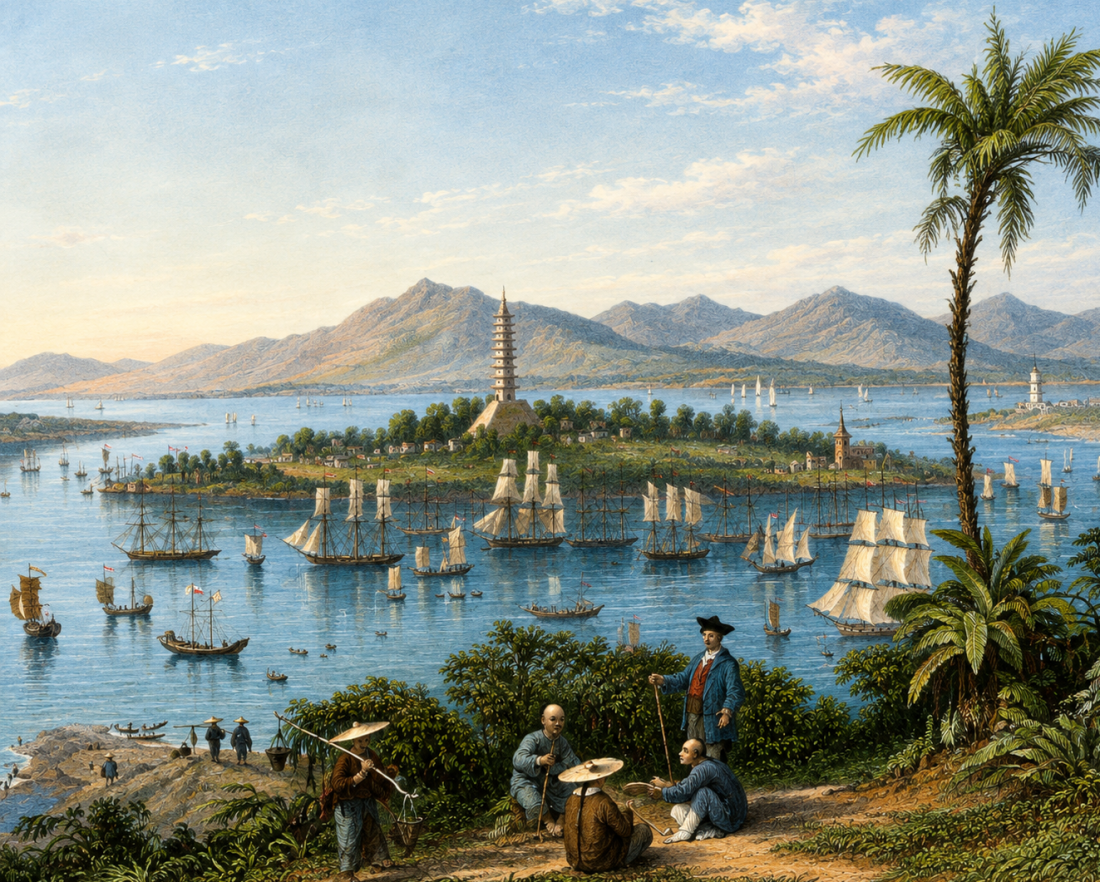
Canton, seen from Whampoa
An answer was found. In Canton the Chinese merchants were keen to pay big money for otter furs that had been carried from the icy northwest of America – and seal furs from the south were almost as valuable. The pioneer was the brig Eliza of New York, which in February 1791 sailed for the Pacific with just provisions and gear, carrying no cargo. The captain was a plausible rogue by the name of William Robert Stewart. His scheme was to sail to Más Afuera, an island off the Pacific coast of Chile. Great flocks of seals had been glimpsed on the island shores, so that was where he and his crew harvested furs. Then instead of returning to New York, he sailed directly to Canton, and sold his cargo there.
Stewart condemned the leaky Eliza in Mauritius, and paid off his sealers, leaving them to find their own way home – and one was a young man from Rhode Island, who arrived by chance in Sydney. This was twenty-three year old Samuel Rodman Chace, the pioneer of sealing in the southwest Pacific and sub-Antarctic. So important was the part he played in the early history of New South Wales and New Zealand that despite the blood and brutality of his trade, he married the most eligible girl in Australia.
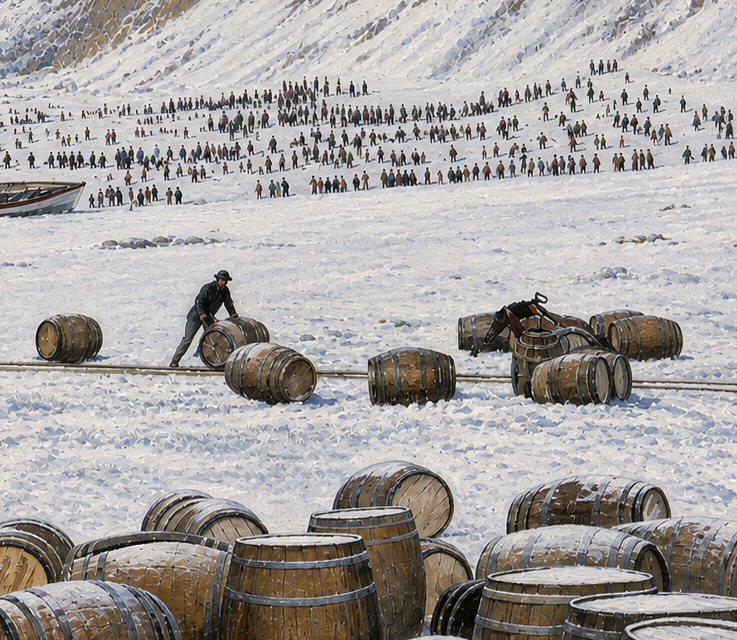
Sealing – a vast and profitable, but brutal, trade
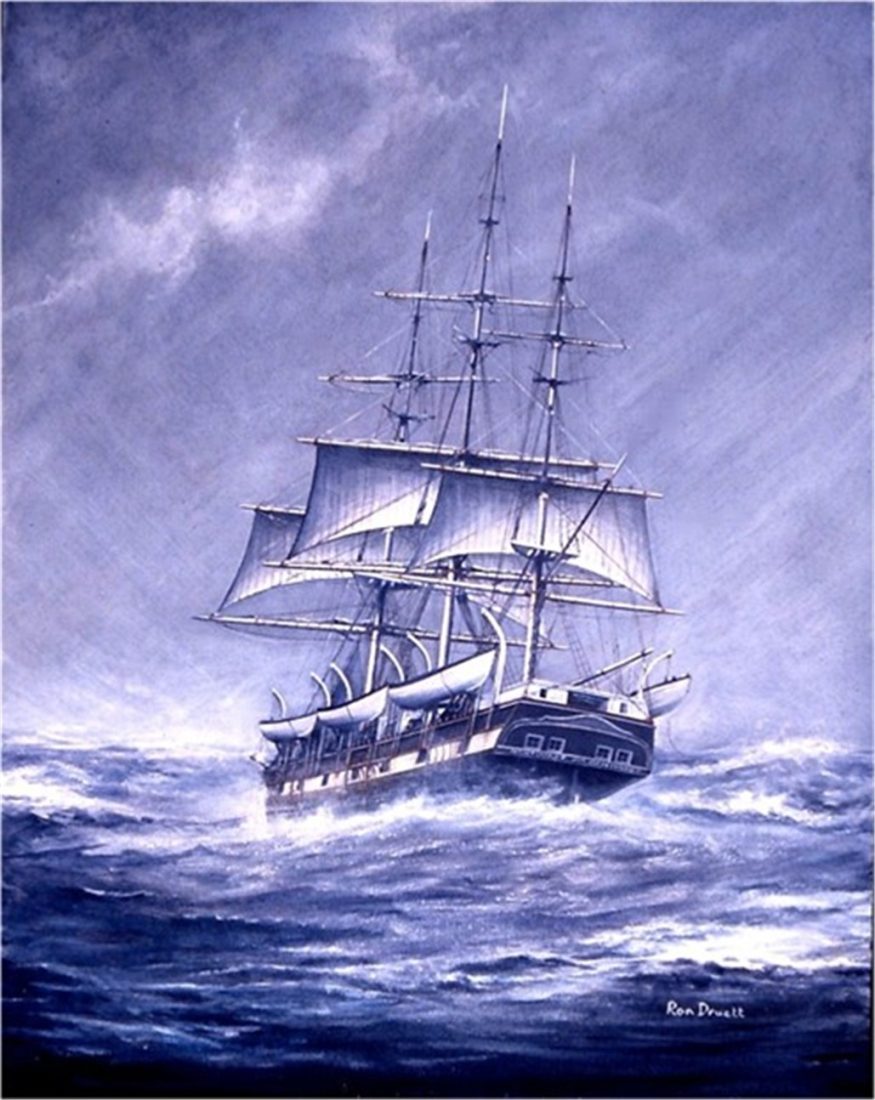
Classic American Whaler
In 1791, the same year the Eliza set out on that pioneering sealing voyage, whaleships commanded by Nantucketers were rounding the Cape of Good Hope. Soon American whalers were culling the right whale migration at Cloudy Bay, and reprovisioning in the Bay of Islands. Formalized trading between Maori and Euro-Americans became established – a process during which the New Zealand natives proved themselves to be natural businessmen. Not only did they soon have potatoes to sell, but meat, too, from wild pigs and goats, receiving blankets, shirts, fishhooks, muskets and hatchets. And so these American adventurers changed the history of New Zealand.
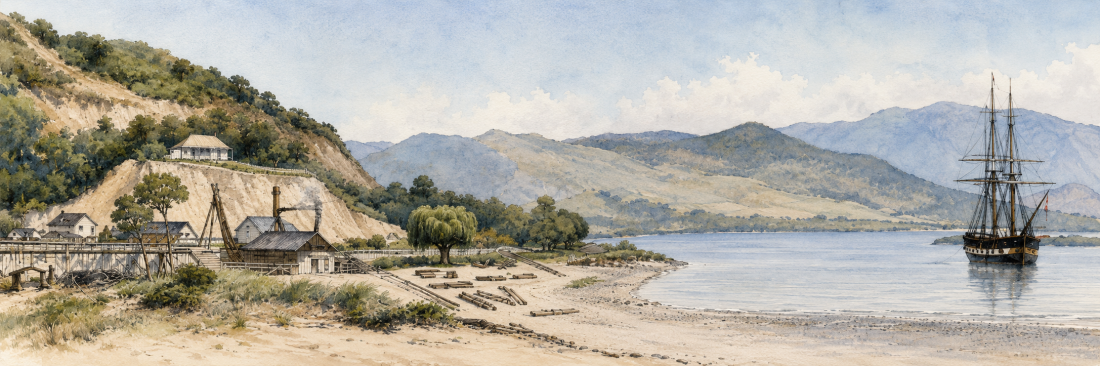
Settlement in the Bay of Islands, New Zealand
Then came the merchant-sailors, who made a fortune from bêche-de-mer. Dried sea cucumbers, harvested from tropical lagoons, then dried into trepang, were valued by the Chinese as an aphrodisiac. The pioneer was the flamboyant Captain William “Old Glory” Driver of Salem. He had no idea how to cure trepang, but in a Fijian lagoon he found a ‘set of Manila pirates, who had murdered their captain, Hosea Boyes, and all his officers, destroyed his brig, the Conception,’ and were selling off the trappings of the looted vessel. Not only did the pirates sell William Driver the necessary boilers – in this case sugar kettles – but they showed him how to cure the trepang as well.
After four years of huge profits from sea slugs, Driver went on to pioneer trade with goods-starved Sydney merchants. There, he set up an entrepôt, and dealt in guns and flour, pitch, resin, tobacco, and sugar ‘and a sprinkling of New England rum.’ Not only did he make a fortune for his ships’ owners, but a host of American entrepreneurs followed in his wake. Such were the characters who created waves in the south Pacific, changing the histories of not just Australia and New Zealand, but of tropical islands too.
My most recent book, Yankee Adventurers, tells about this period in greater detail and information on purchase options is provided below.
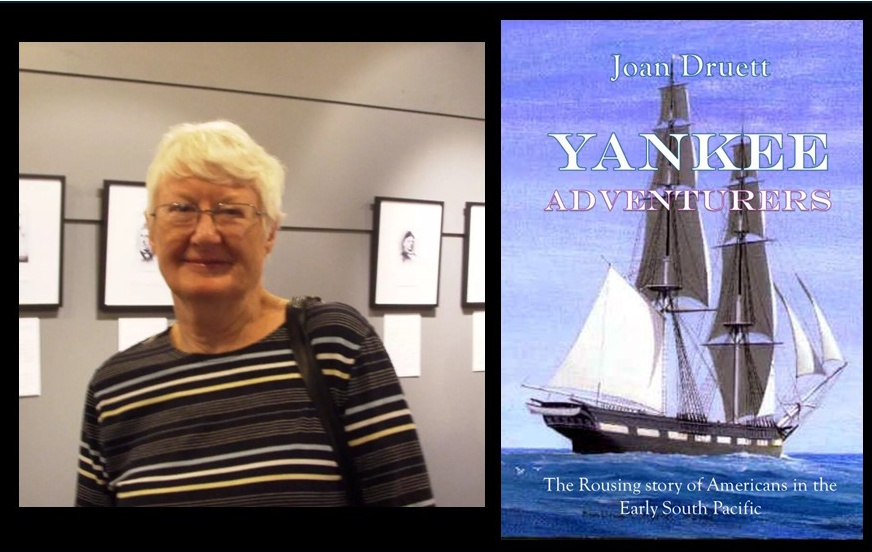 Joan Druett is the author of many award-winning books, both fiction and non-fiction, including Island of the Lost, Tupaia, and the Wiki Coffin series. She has an international reputation in the field of nautical history, and has a particular following in North America. Her books are often based on the lives of women, particularly those who were connected with whaling and life at sea (Petticoat Whalers, Hen Frigates). She lives in Wellington, New Zealand.
Joan’s most recent book, Yankee Adventurers, is available in Paperback and Kindle formats. Purchase links as below – click according to your geographical area.